Integrating MEMS Accelerometers and Broadband Seismometers: Challenges and Opportunities in Modern Seismology
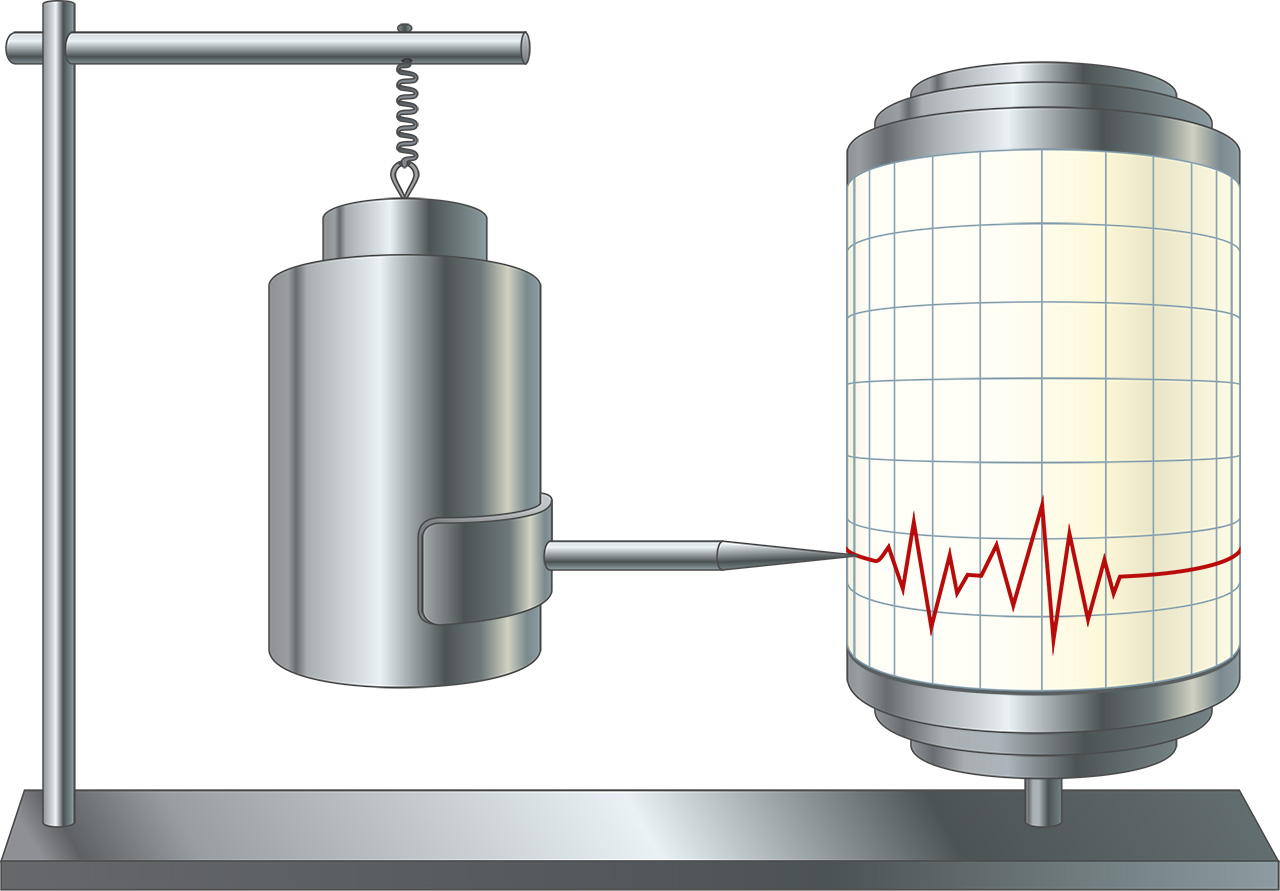
Seismology has seen growing interest in MEMS accelerometers — Micro-Electro-Mechanical Systems sensors — as an alternative or complement to traditional broadband seismometers. MEMS win on cost, size, and deployment flexibility, but they trade away performance at the low-frequency end. This article looks at how the two technologies can be integrated rather than pitted against each other.
The core tension
It comes down to a frequency tradeoff:
- MEMS accelerometers are cheap, small, and rugged — ideal for dense arrays and high-frequency local signals, but weak at long periods.
- Broadband seismometers are exquisitely sensitive across a wide band — essential for low-frequency / long-period global signals, but costly and sparse.
The future isn’t one or the other; it’s a hybrid — a broadband backbone plus dense MEMS infill.
Where MEMS shine
MEMS accelerometers have advanced remarkably, with some models showing excellent long-term stability and sensitivity suitable for gravimetry and seismology [1]. Because they’re cheap and small, you can deploy many of them — giving high spatial resolution, especially for higher-frequency phenomena, which makes them ideal for dense array deployments in local and regional studies [2].
Where broadband still wins
MEMS accelerometers still struggle to record long-period seismic waves. Broadband seismometers remain crucial for capturing low-frequency signals — the signals essential for global seismology and for imaging deep Earth structure [3]. Capturing those long-period waves doesn’t demand extremely dense station coverage, which is why broadband instruments fit their current role in sparse global networks.
“Long-period” vs “high-frequency,” quickly: a long-period wave oscillates slowly (say, tens to hundreds of seconds per cycle) and carries information about large-scale, deep structure; a high-frequency signal (many cycles per second) is local and detailed. Different sensors are tuned to different ends of this spectrum — which is the whole point of pairing them.
The bandwidth and sensitivity gap
The primary challenge in replacing broadband seismometers with MEMS is bandwidth and sensitivity. Some MEMS accelerometers reach noise levels as low as 1.5 μg/√Hz [4], yet still fall short of high-end broadband instruments at low frequencies — a gap that matters most for phenomena like Earth tides or long-period surface waves. That said, the gap is narrowing: recent MEMS accelerometers report a dynamic range up to 110 dB and frequency responses extending from DC (0 Hz) to over 1000 Hz [5].
You want to study Earth tides and long-period surface waves. Which instrument is the right primary choice today?
The hybrid future
Combining a backbone of high-quality broadband stations with dense arrays of MEMS sensors could leverage the strengths of both: unprecedented spatial resolution for local and regional studies and the ability to capture global-scale, long-period phenomena. Realizing that vision needs progress on a few fronts — data-fusion algorithms to combine heterogeneous sensor types, continued improvement of MEMS to extend their usable frequency range, and new deployment strategies for mixed-sensor networks.
Recap
Without scrolling up — can you state the tradeoff and the resolution?
- MEMS: cheap, small, dense, great at high frequency — but weak at long period.
- Broadband: sensitive, wide bandwidth, great at low frequency — but costly and sparse.
- Hybrid: a broadband backbone plus dense MEMS infill, tied together by data fusion — the likely future of seismic instrumentation.
MEMS can’t yet fully replace broadband seismometers for long-period and global seismology, but as a complement they promise more comprehensive, higher-resolution insight into Earth’s dynamics.
References
- Field Tests of a Portable MEMS Gravimeter — Middlemiss et al., 2017, Sensors, 17(11), 2571.
- Seismic Sensors Based on MEMS Technology: Advances and Perspectives — D'Alessandro et al., 2019, Sensors. (DOI not verified; listed for reference.)
- Principles of Broadband Seismometry — Ackerley, 2015, Encyclopedia of Earthquake Engineering, Springer.
- Ultra-low-noise MEMS accelerometer — SkyMEMS product page (manufacturer specification).
- An Ultra-Low-Noise MEMS Accelerometer for Seismology (QuietSeis) — Guerineau & Fougerat, EGU General Assembly 2018 (conference presentation; no DOI).
Disclaimer of liability
The information provided by the Earth Inversion is made available for educational purposes only.
Whilst we endeavor to keep the information up-to-date and correct. Earth Inversion makes no representations or warranties of any kind, express or implied about the completeness, accuracy, reliability, suitability or availability with respect to the website or the information, products, services or related graphics content on the website for any purpose.
UNDER NO CIRCUMSTANCE SHALL WE HAVE ANY LIABILITY TO YOU FOR ANY LOSS OR DAMAGE OF ANY KIND INCURRED AS A RESULT OF THE USE OF THE SITE OR RELIANCE ON ANY INFORMATION PROVIDED ON THE SITE. ANY RELIANCE YOU PLACED ON SUCH MATERIAL IS THEREFORE STRICTLY AT YOUR OWN RISK.
Leave a comment