Understanding MEMS Accelerometers
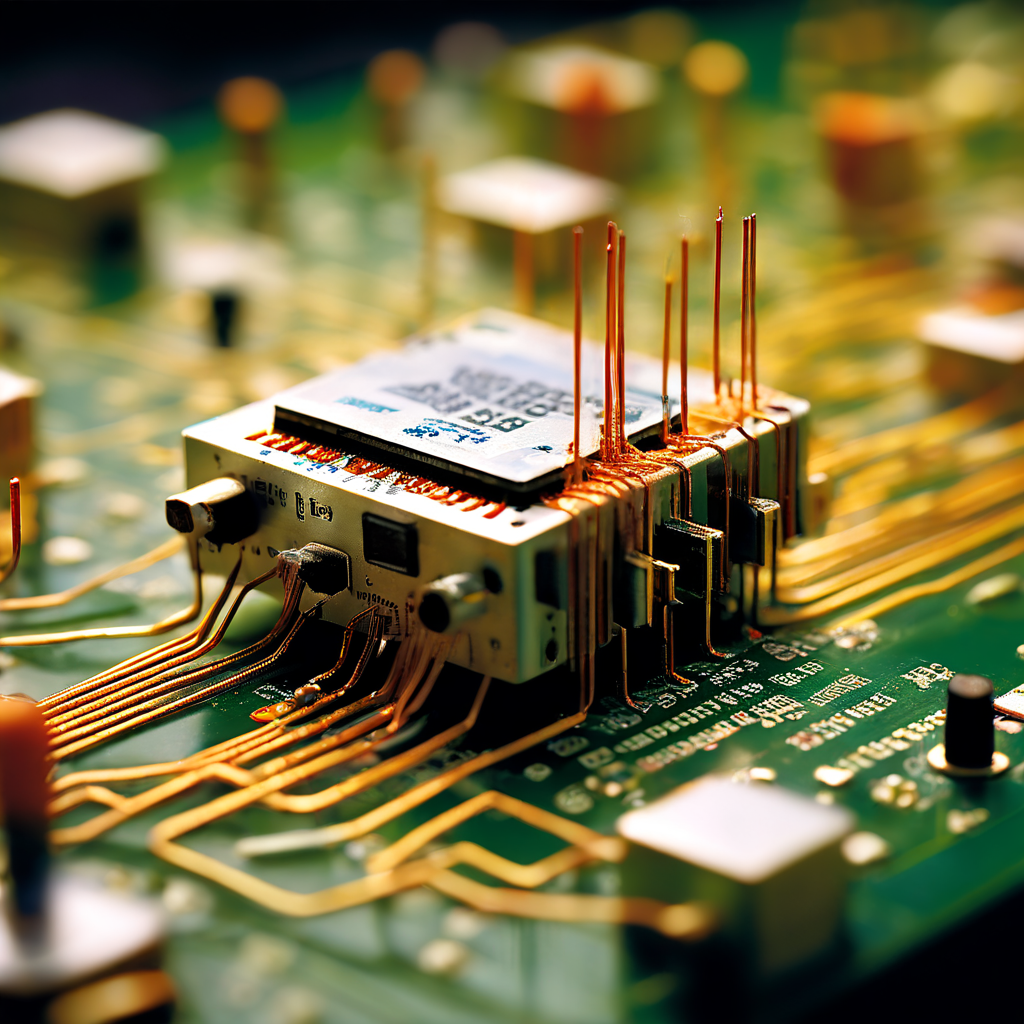
Micro-Electro-Mechanical Systems (MEMS) accelerometers are miniature sensors that measure acceleration by combining mechanical and electronic components on a single silicon chip. They’ve quietly revolutionized modern technology — from the screen-rotation in your phone to airbag triggers in your car — by packing precise motion sensing into a compact, low-power, low-cost package.
The one mental model
Every MEMS accelerometer is a mass on springs between two electrodes. When the chip accelerates, the proof mass lags behind and shifts; that shift changes the capacitance between the mass and the fixed electrodes; the circuit reads the capacitance change out as a voltage proportional to acceleration.
acceleration → proof mass moves → capacitance changes → voltage out.
What is a MEMS accelerometer?
At its core is a microscopic mechanical structure etched into silicon, typically with features between 1 and 100 micrometers in size [1]. A small proof mass is suspended by springs so it can move in response to acceleration; that motion is what the sensor converts into an electrical signal.
How it works
Step by step:
- Suspended mass and springs: the proof mass moves relative to its frame when the device accelerates.
- Capacitance change: that movement changes the gap between the mass and the fixed electrodes, altering the capacitance — proportionally to the acceleration.
- Sensing and processing: the circuitry detects the capacitance change and converts it to an electrical signal.
- Output: the result is a voltage a microcontroller or computer can read.
The mechanics are a textbook mass-spring system. The structure has a natural (resonant) frequency
\[f_0 = \frac{1}{2\pi}\sqrt{\frac{k}{m}}\]and well below that frequency the proof mass displacement $x$ under acceleration $a$ is
\[x = \frac{m\,a}{k} = \frac{a}{\omega_0^2}, \qquad \omega_0 = 2\pi f_0\]That single relation captures the fundamental sensitivity–bandwidth tradeoff: a softer spring (smaller $k$, lower $f_0$) gives a larger displacement per unit acceleration — more sensitive — but a lower usable bandwidth. Stiffer springs do the reverse. It’s the chip-scale version of the same tradeoff that separates MEMS from broadband seismometers.
To make a MEMS accelerometer more sensitive (larger signal per g), how should you change the spring?
Sensing mechanism
The most common sensing mechanism is capacitive sensing — measuring the change in capacitance caused by the proof mass moving. Capacitive sensing is prized for its high accuracy, stability, and low power consumption [2].
Types of MEMS accelerometers
Two designs dominate, each tuned to a different job:
- Variable Capacitive (VC): high-sensitivity devices for low-range work such as structural monitoring and static/constant acceleration — strong in low-frequency and static measurements [4].
- Piezoresistive (PR): high-range, lower-sensitivity devices for shock and blast forces. They tolerate higher g-forces and are less sensitive to temperature, suiting harsh environments [4].
You need to measure a violent blast/shock event (very high g). Which type fits?
Applications
MEMS accelerometers show up almost everywhere, thanks to their small size, low cost, and precision:
- Consumer electronics: screen orientation, motion-based apps, and camera image stabilization [5].
- Automotive: airbag collision detection, stability control, and advanced driver-assistance systems (ADAS) [6].
- Industrial: vibration monitoring, predictive maintenance, and structural health monitoring of buildings and bridges [3].
- Medical: activity tracking, fall detection in wearables, and gait analysis for rehabilitation [5].
- Aerospace: navigation and inertial measurement units (IMUs) for attitude and heading reference [6].
Advantages
- Small size — integrate into tiny devices.
- Low cost — mass-production makes them affordable.
- High sensitivity — detect very small acceleration changes.
- Low power — suited to battery-operated devices.
- Reliability — no conventional moving parts, so long operational life.
Recent developments and future trends
- Improved performance: higher sensitivity, lower noise, better temperature stability.
- Integration: multi-axis accelerometers combined with gyroscopes and magnetometers into complete IMUs on one chip.
- AI and machine learning: MEMS data feeding ML models for richer motion analysis and predictive maintenance.
- IoT: MEMS as key components in smart-home, industrial-IoT, and wearable devices [7].
Comparison with other accelerometer technologies
MEMS dominate on size and cost, but other technologies still have niches:
- Piezoelectric: higher frequency response, common in machinery vibration analysis.
- Optical: high accuracy and immunity to electromagnetic interference for specialized use.
- Traditional (non-MEMS) capacitive: still used in some high-precision applications [4].
For most modern applications, though, MEMS offer the best balance of performance, size, and cost.
Recap
Without scrolling up — can you explain the sensor in one line? A MEMS accelerometer is a proof mass on springs between electrodes:
- Acceleration displaces the mass by $x = a/\omega_0^2$,
- which changes the capacitance to the fixed electrodes,
- read out as a voltage proportional to acceleration,
- with a built-in sensitivity–bandwidth tradeoff set by the spring stiffness.
That simple mass-spring-capacitor, mass-produced on silicon, is why acceleration sensing is now cheap and everywhere.
References
- MEMS Accelerometers — Andrejašič & Poberaj, 2008, University of Ljubljana (seminar).
- Accelerometer and Gyroscope Sensors: Operation, Sensing, and Applications — Analog Devices, 2015 (technical article).
- Why MEMS Accelerometers Are the Designer's Best Choice for CBM Applications — Analog Devices, 2021 (technical article).
- Introduction to MEMS — Tai, 2012, in Microsystems and Nanotechnology, Springer.
- Benefits and Applications of MEMS Accelerometers — SkyMEMS (manufacturer article).
- Applications and Prospects of MEMS Sensors in Automotive — Jin, 2021, Journal of Physics: Conference Series, 1884(1), 012010.
- MEMS Industry: After the Storm, a Brighter Horizon? — Yole Group, 2024 (industry analysis).
Disclaimer of liability
The information provided by the Earth Inversion is made available for educational purposes only.
Whilst we endeavor to keep the information up-to-date and correct. Earth Inversion makes no representations or warranties of any kind, express or implied about the completeness, accuracy, reliability, suitability or availability with respect to the website or the information, products, services or related graphics content on the website for any purpose.
UNDER NO CIRCUMSTANCE SHALL WE HAVE ANY LIABILITY TO YOU FOR ANY LOSS OR DAMAGE OF ANY KIND INCURRED AS A RESULT OF THE USE OF THE SITE OR RELIANCE ON ANY INFORMATION PROVIDED ON THE SITE. ANY RELIANCE YOU PLACED ON SUCH MATERIAL IS THEREFORE STRICTLY AT YOUR OWN RISK.
Leave a comment